The Secret History Behind the Iconic Guns N’ Roses Use Your Illusion I & II Album Cover
The artistic foundation for the legendary double-album release by Guns N’ Roses — Use Your Illusion I & II — is rooted in a masterpiece by the great Italian High Renaissance painter Raphael Santi: The School of Athens (painted between 1509 and 1511), located within the Apostolic Palace in the Vatican. History of creation and interesting facts: Who is this character on the cover?
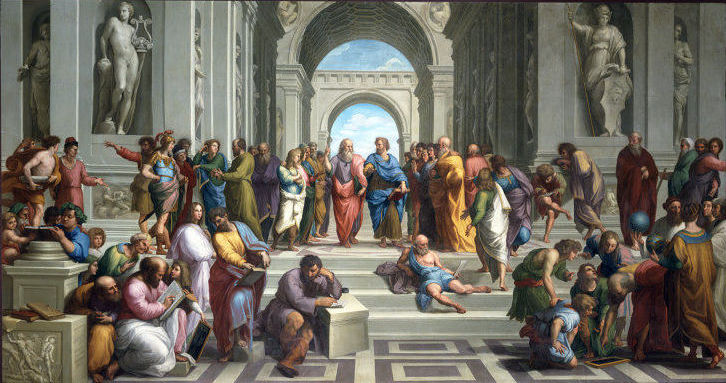
Raphael’s fresco depicts the greatest thinkers and scientists of antiquity. However, the young man jotting notes into a notebook while leaning on his knee is an anonymous figure. Within art history circles, there is no definitive consensus regarding his exact identity: he is most frequently interpreted as a pupil of Parmenides, a disciple of Protagoras, or simply a background bystander.
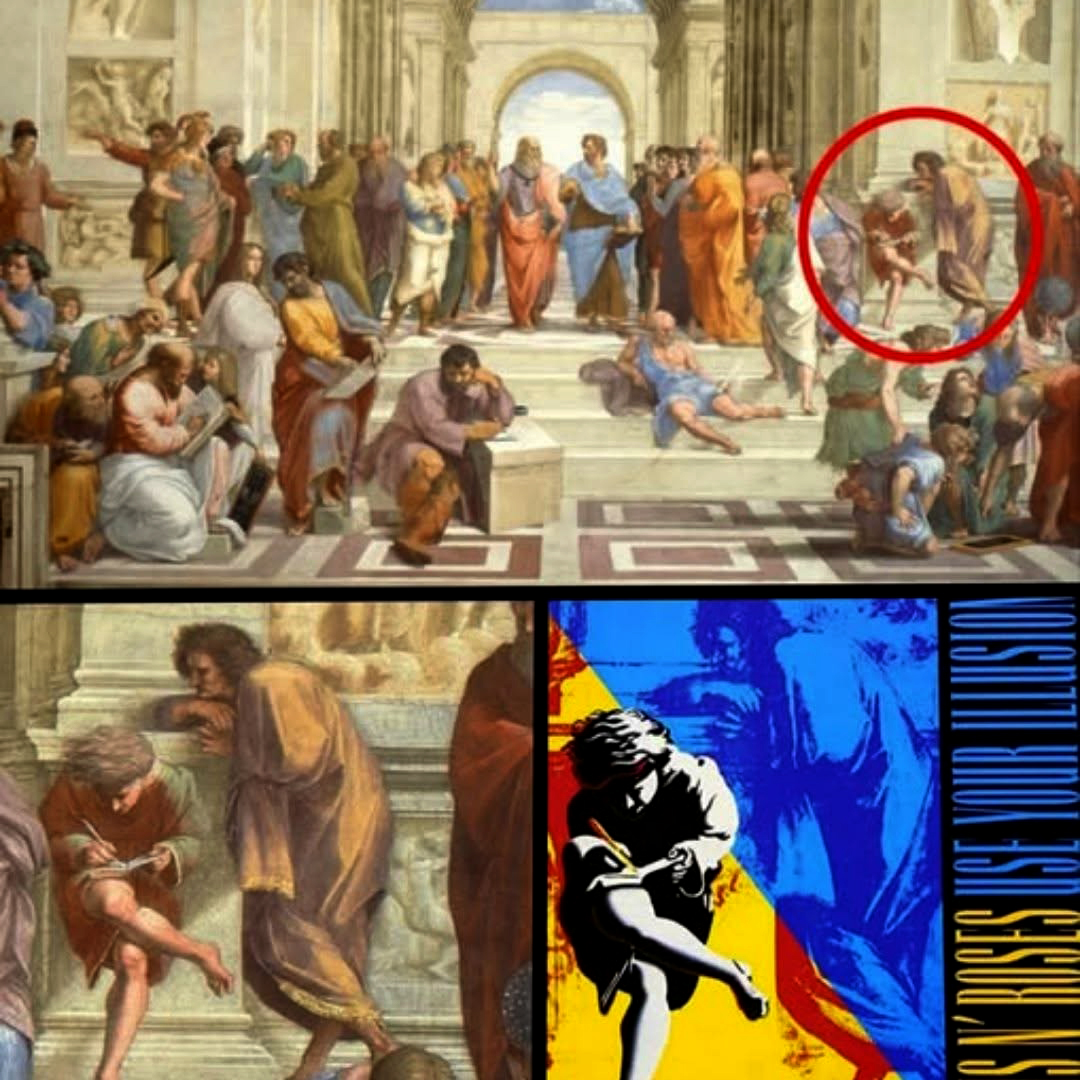
How Axl Rose Discovered the Artwork
Estonian-American artist Mark Kostabi and his brother Paul were actively searching for concept ideas for the new Guns N’ Roses album packaging. Mark stumbled upon a section of The School of Athens, isolated the figure of this unknown youth, and turned him into the central focal point. When he presented the preliminary sketch to Axl Rose, the frontman was utterly thrilled, believing the seated young man's posture perfectly encapsulated the intense emotion of musical immersion and songwriting.
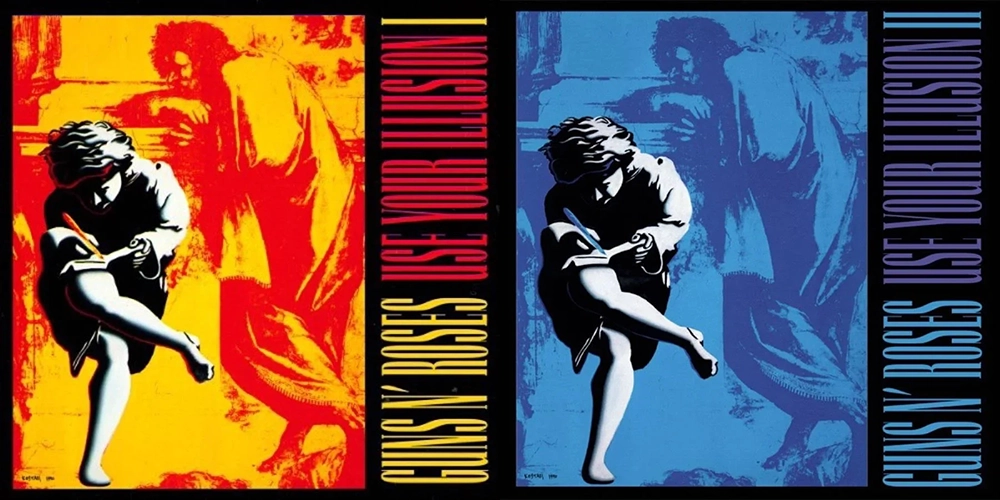
The Color Concept of the Two Parts (I and II):
-
Use Your Illusion I: Rendered in warm yellow and red tones. The music on the first disc is widely considered more driving, raw, and pulsating with unbridled energy, blending classic hard rock with heavy punk influences.
-
Use Your Illusion II: Executed in cool blue and violet hues. This record leans significantly darker, more melancholic, and deeply conceptual.
The Irony of High Art Meets Street-Level Rock:
The undeniable irony of a rowdy, rebellious, and rebellious rock band choosing a High Renaissance Vatican fresco as the visual anchor for their career-defining statement became a textbook example of pop-art subversion. Mark Kostabi seamlessly transplanted a classic academic motif into the stylistic realm of neo-expressionism.
The Copyright Nuance:
Because Raphael’s original work resides firmly within the Public Domain, neither the band nor the artist was required to pay royalties to the Vatican for utilizing the fresco fragment itself. Compensation was rendered solely to Kostabi for his specialized design processing, aesthetic adaptation, and custom digital reworking.