Victim of the Loudness War: Why Metallica Fans Demanded a Remix of Death Magnetic
Take a look at this graphic. It is neither a seismic activity chart nor an image of a dense forest. It is a visual representation of how the waveform of the very same track evolved over the decades. From the open, breathing musical waveform of 1979, we transitioned into a completely dense, solid “brickwall” in the 21st century.
In the recording industry, this phenomenon is known as the Loudness War. But how and why did musical art turn into a frantic race for decibels?
1. Where Did the "Loudness War" Come From?
It all started back in the era of vinyl records and radio broadcasting. Producers and record labels noticed a simple rule: the human brain perceives a louder sound as higher quality, punchier, and more energetic.
When radio broadcasts transitioned between tracks, a song mastered louder than the rest instantly grabbed the listener's attention. To stand out, sound engineers began utilizing heavy compression and limiters—audio processors that trim quiet passages and peak transients while boosting the overall perceived loudness.
In the vinyl era, physical limitations prevented engineers from pushing loudness infinitely (the stylus would literally jump out of the groove). However, with the advent of CDs and digital audio recording in the 1990s, all physical constraints vanished.
2. The Loss of Dynamic Range: What Did We Lose?
To make a track as loud as possible, sound engineers are forced to sacrifice dynamic range—the difference between the quietest and loudest moments in a song.
-
In the 1970s–1980s: Music possessed genuine depth. An intro could be subtle and quiet, drum hits airy, and the climax explosive.
-
In the 2000s: Every element of the track (drums, guitars, vocals) was smashed into a single, unyielding solid bar. Subtle details vanished, and emotional shifts were flattened out.
The result of such over-compression is ear fatigue. The human brain quickly grows exhausted from continuous, compressed sound pressure, and after 15–20 minutes, listeners feel an instinctive urge to turn off the music.
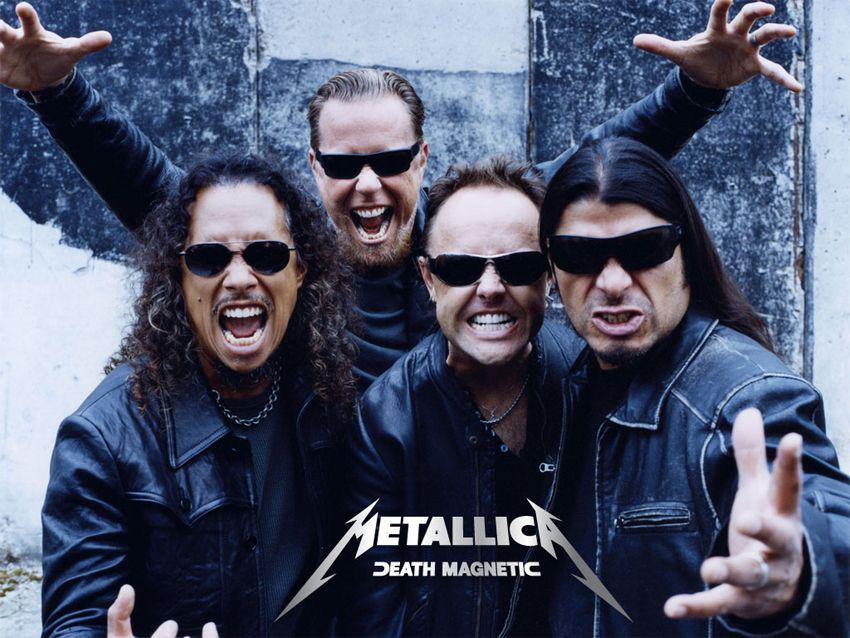
3. The Death Magnetic Scandal (2008): The Peak of the Race
The loudest and most resonant event in the history of the Loudness War was the release of legendary band Metallica’s album Death Magnetic in 2008.
Millions of fans worldwide awaited the record eagerly. The material was fierce, returning the band to their fast and aggressive thrash metal roots. But when CDs reached listeners' speakers and headphones, shock ensued:
-
Distortion and Clipping: The audio literally cracked, buzzed, and distorted on peaks. Drums sounded like flat slaps, and guitars blurred into an unreadable wall of mud.
-
The Guitar Hero Phenomenon: On the exact same day, an expansion pack for the video game Guitar Hero 3 was released, featuring tracks from Death Magnetic. Players noticed something incredible: inside the game, the songs sounded incomparably cleaner, more spacious, and vastly superior to the officially purchased CD! The reason was simple—the game masters had not undergone the final aggressive compression stage.
-
Fan Petition: Over 20,000 fans signed an official petition demanding that the record label and Metallica completely remix and remaster the album.
Mastering engineer Ted Jensen later admitted that he did not mix the record—he was sent already hyper-compressed mixes that he could do nothing to fix. This case became the primary precedent proving that the loudness race had gone way too far.
Thousands of audiophiles, sound engineers, and fans worldwide attempted to restore the dynamics of Death Magnetic. The most famous unofficial project is Moderus Remaster (alongside Guitar Hero rips), but even they could not completely fix the issue. The reason is simple and tragic: digital clipping (overload) was baked in at the mixing and mastering stage.
4. What Is Happening Today?
Fortunately, the industry has learned its lesson. With the rise of streaming services (Spotify, Apple Music, YouTube), the era of LUFS (loudness normalization) has arrived.
Streaming platforms automatically normalize the volume of all incoming tracks to a unified standard (for example, -14 LUFS on Spotify). This means that if you make your track super-compressed and artificially loud, the algorithm will simply turn it down, making it sound squashed and inferior compared to a track with proper, well-preserved dynamics.
Summary
Music is emotion, and emotions live in the contrast between silence and explosion. The Loudness War proved that trying to be "the loudest of them all" can completely kill the soul of a piece of art. Today, looking back at vintage recordings, we are once again learning to value audio dynamics and sonic purity!