1964 Fender Jazz Bass Secrets: Custom Tangerine Sparkle Metal Flake Finish and Hot-Rod Heritage!
This extraordinary Fender Jazz Bass was crafted in February 1964 and features a one-of-a-kind Tangerine Sparkle metal flake sunburst finish with a matching headstock.
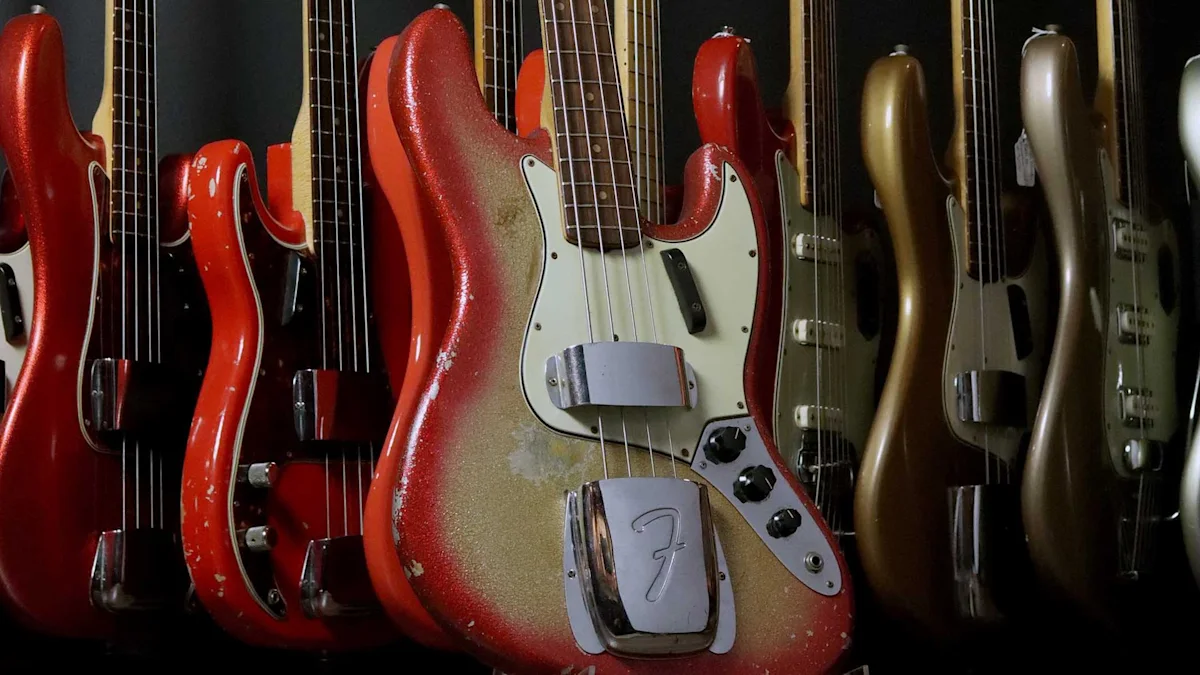
Alongside this ultra-rare finish, the bass boasts an alder body, maple neck, beautifully figured rosewood fretboard with vintage clay dots, and an original green nitrate pickguard. It encompasses all the highly sought-after pre-CBS specifications paired with a custom paint job.
Featuring a thin 'A' profile neck, the instrument retains its original internal electronics in flawless condition. The bass required a proper refret upon acquisition to replace non-original frets, restoring its playability to custom-shop standards. It stands as one of the finest instruments in the shop, serving as the benchmark bass for testing high-end bass amplifiers.
The neck offers even response across all frets, complemented by exceptionally well-balanced vintage pickups with a bell-like resonance. The neck pickup cover is a period-correct replacement, awaiting an original vintage part.
Acquired on the West Coast approximately 15 years ago from a personal contact before vintage market prices surged, the instrument came complete with its original white hard case.
The playability, weight distribution, and acoustic balance instantly mark this instrument as exceptional. Extensive finish wear on the back of the alder body exposes raw wood, testifying to decades of dedicated play time by its previous owner.
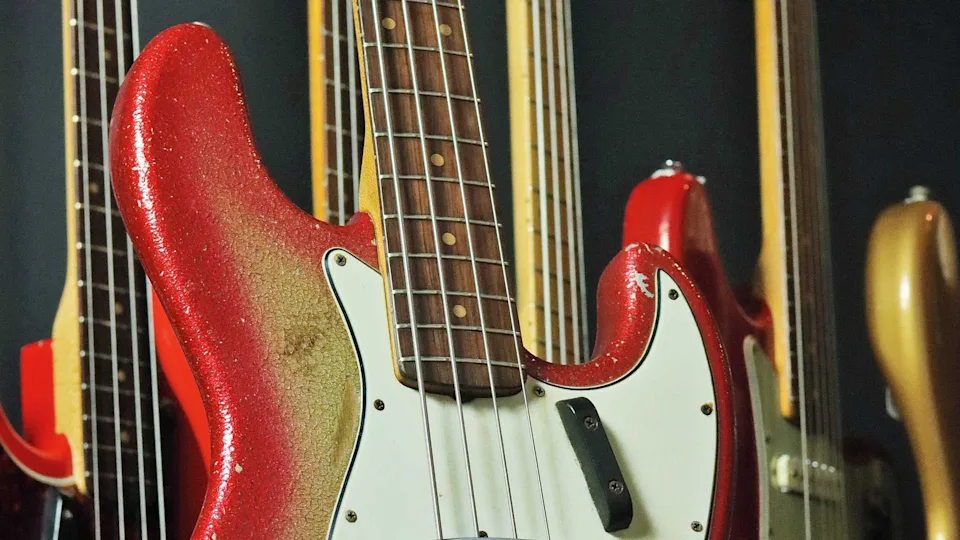
Historical accounts confirm that Fender outsourced sparkle finishes to independent custom automotive and hot-rod spray shops based on competitive pricing per body.
During this era, Fender utilized Binks Model 7 suction-cup spray guns, which lacked the air pressure required to lift large metal flakes. External hot-rod shops operated gravity-fed paint guns, technology that Fender did not integrate internally until 1966.
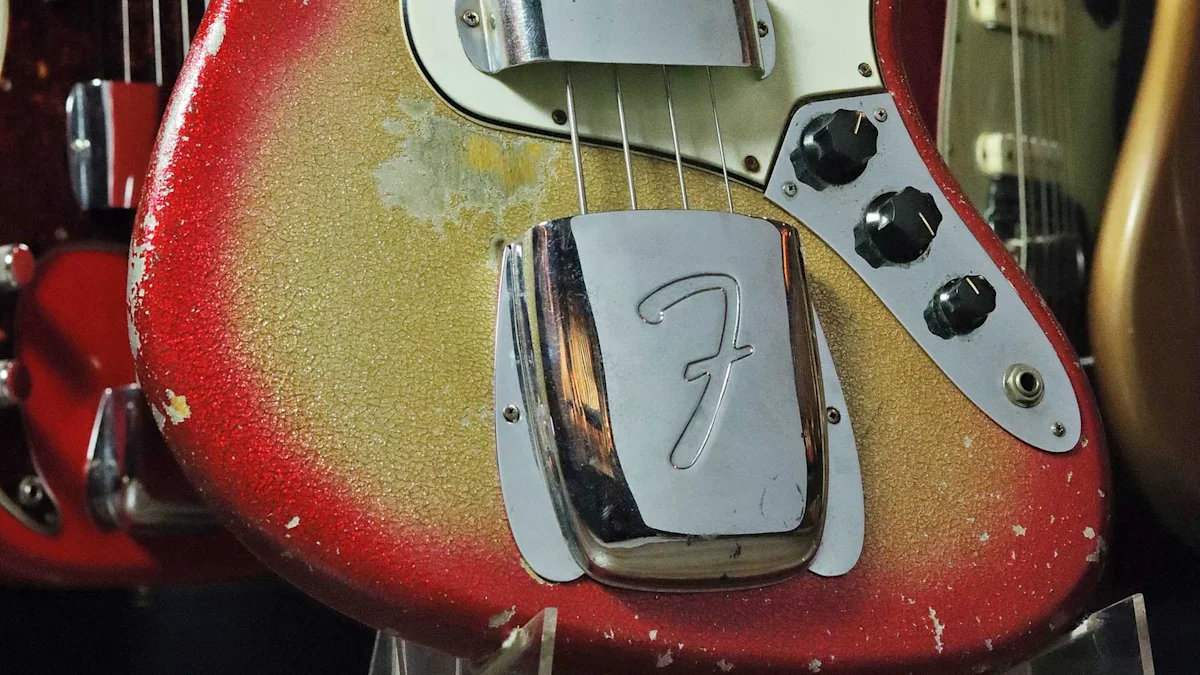
The custom finish is attributed to Dennis Swiden, a furniture and automotive painter operating out of his family's workshop. Dennis Swiden maintained close ties with Fender personnel, frequently using George Fullerton's parking space while loading unpainted bodies into his car trunk. Once sprayed with metal flake sparkle finishes, the bodies were returned to the Fender factory for assembly. His custom work became highly prized among surf-rock and Bakersfield country musicians.
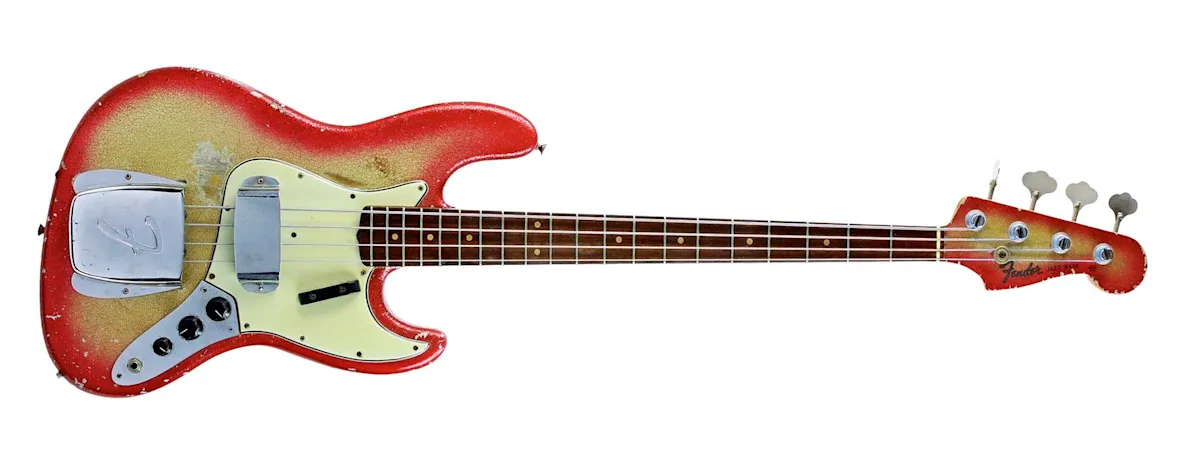
The custom sunburst application on the headstock serves as a signature of Dennis Swiden's work, predating Fender's official adoption of matching headstocks in early 1962. The finishing process involved a silver metallic base coat, a gold center tone (potentially aged clear nitrocellulose lacquer over silver), and red perimeter bursting.