A new turn in evolution: Slash on the radical change in guitar gear and the dawn of the blues revival
Automatic translation. Russian original
Back in the nineties, right after he left the legendary lineup of Guns N' Roses, the famous guitarist, with his trusty Les Paul in hand, regularly visited local Los Angeles bars and clubs, performing classic blues standards. That project was named The Blues Ball, and, by the musician's own admission, it was not intended to be anything serious.
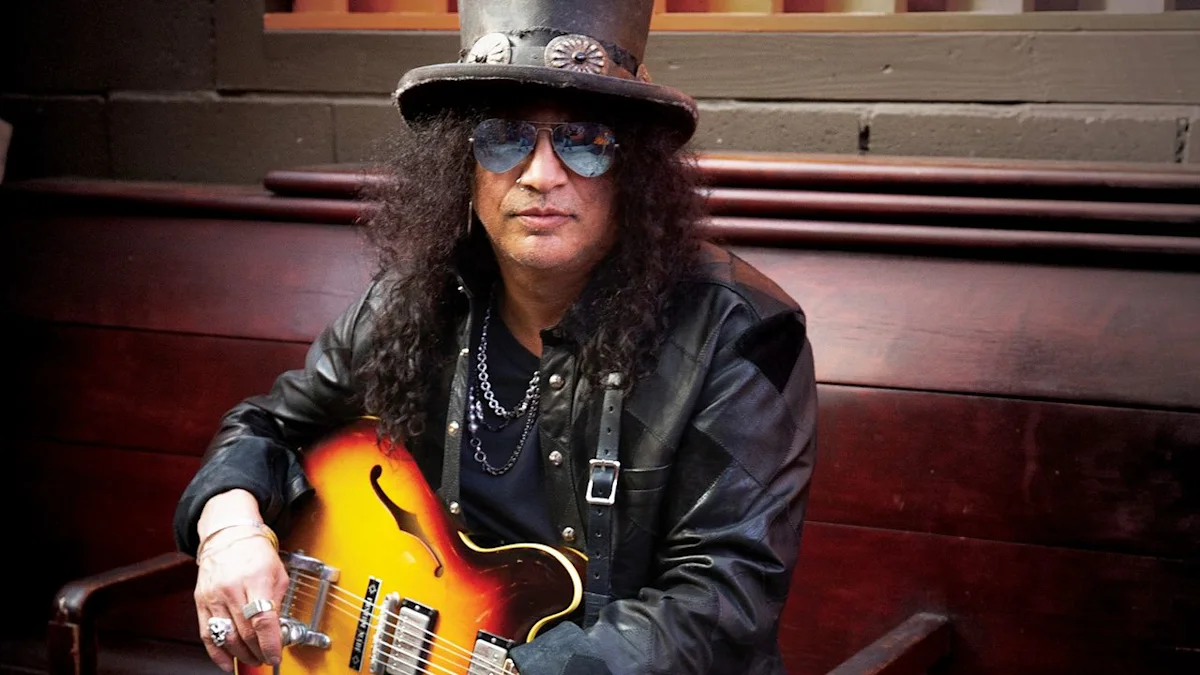
"Essentially, it was just a great, boozy excuse to get on stage and jam for fun," says Slash candidly in an interview for Guitaristmagazine. However, nearly thirty years later, his passion for blues roots and the gear that inspires such music has grown into a deeply serious pursuit. The result of this evolution is the 2024 studio album titled Orgy Of The Damned — a record of blues covers featuring a constellation of star guests, a huge number of rare vintage guitars, and Magnatonecombo amplifiers, which have completely replaced the familiar monumental stacks from Marshall.
in his rig. " Magnatone combos produce a much tighter, fuller bottom end and sound clean," shares the guitarist. "When you play a chord, you can hear every individual note clearly. For me, this has been a colossal shift in my understanding of tone."
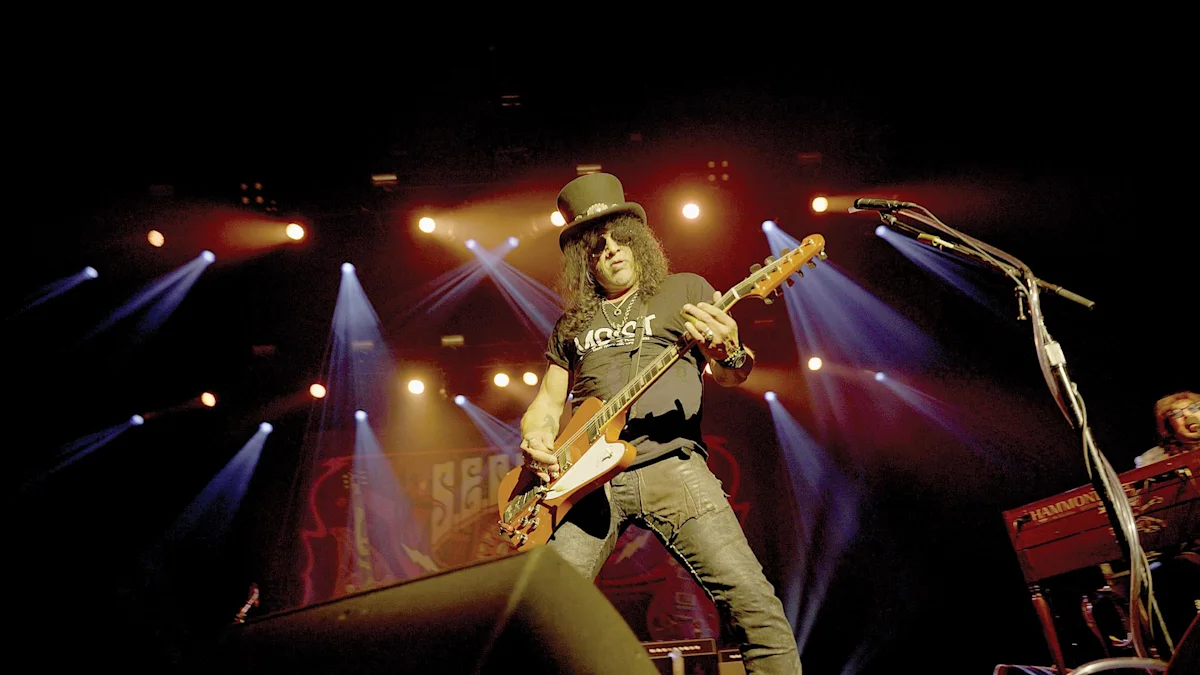
In support of the release Orgy Of The Damned , the musician embarked on a massive tour, which resulted in the live concert album Live At The S.E.R.P.E.N.T. Festival. This release perfectly captured the thick blues magic that the band recreated on stage, reimagining iconic blues standards and classic rock tracks. The name of the festival itself is a profound acronym calling for solidarity, engagement, restoration, peace, equality, and tolerance (Solidarity, Engagement, Restore, Peace, Equality N' Tolerance), and all proceeds from the event went to support various charitable foundations.
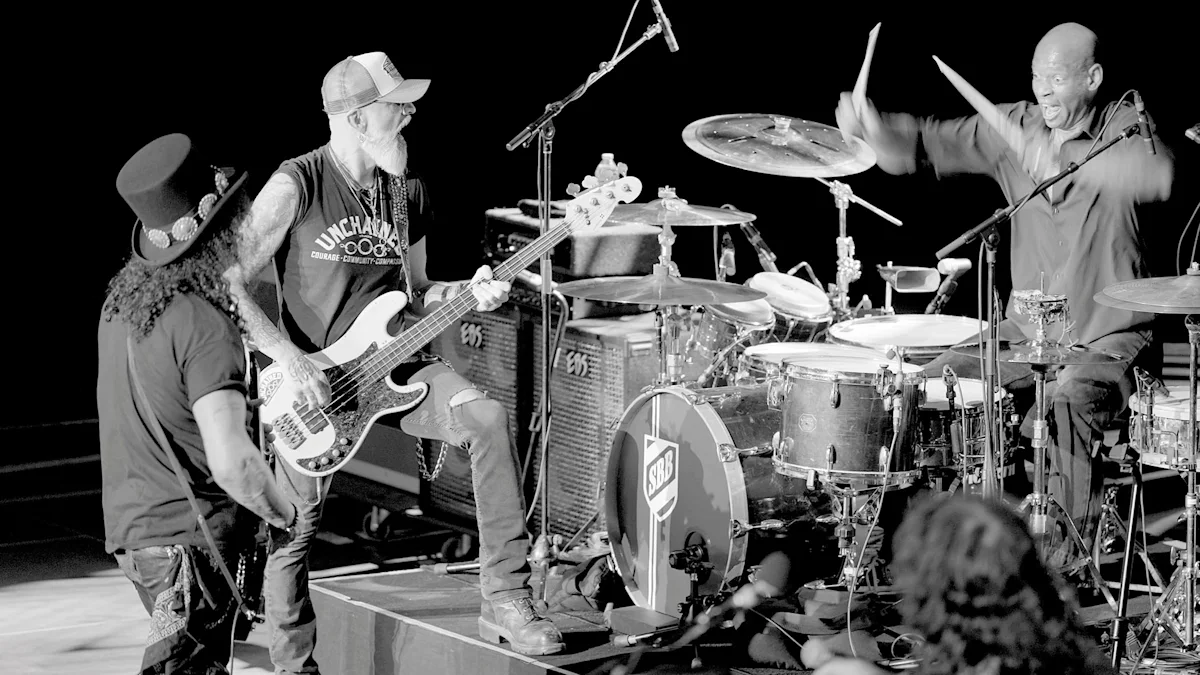
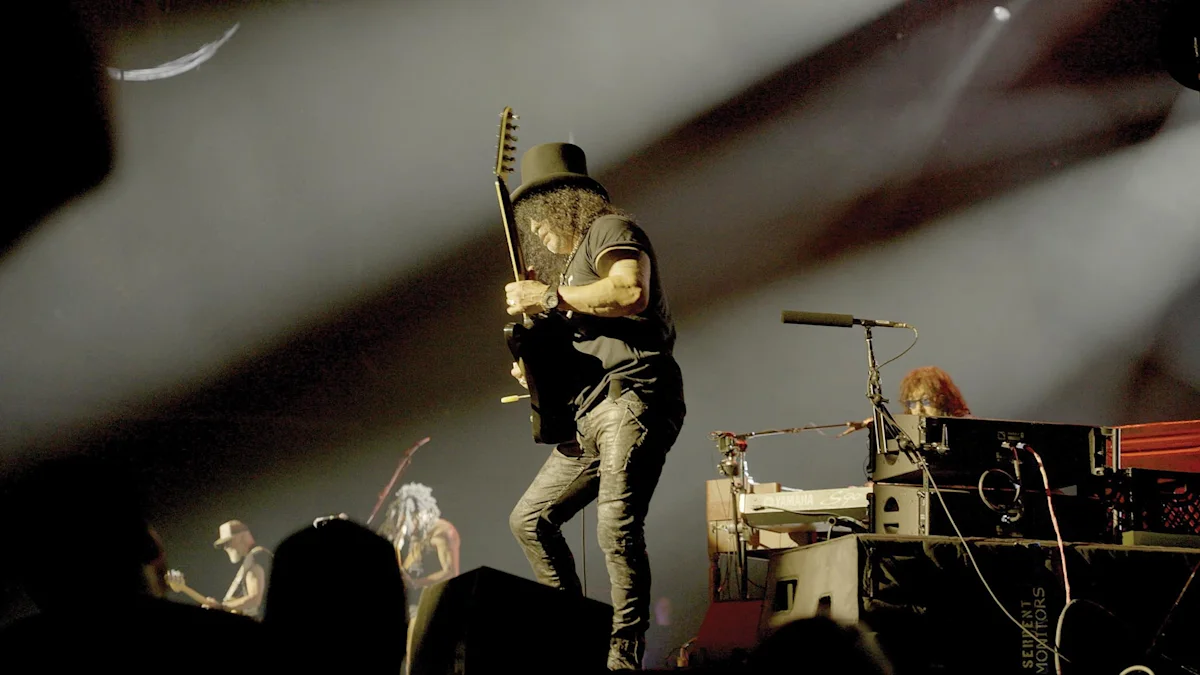
The core touring band included top-tier musicians: Teddy 'Zig Zag' Andreadis (keyboards and harmonica), Tash Neal (rhythm guitar), Johnny Griparic (bass guitar), and Michael Jerome (drums). It is clear that this current endeavor means much more to the bandleader than his old 90s bar jams, though the focus on the pure joy of the process has not disappeared.
"I'm absolutely not trying to pose as a hardened bluesman," Slashnotes with a smile. "Many rock musicians are guilty of this: they play hard rock their whole lives, and then suddenly claim they are true bluesmen. I'm just offering my own interpretation of those works that had a fundamental influence on me back when I first picked up an instrument."
The blues foundation has always been an integral part of your unique signature, but the live release Live At The S.E.R.P.E.N.T. Festival demonstrates an entirely different, deeper level.
You hit the nail on the head. When I was just starting to learn guitar, my first idols were the blues-oriented rockers of the sixties and early seventies. However, a little later, my grandmother introduced me to the work of the great B.B. King, because she was just bored to death of me listening to the same British rockers endlessly. She declared firmly, 'This is the genuine original source.' She opened that door for me, showing the direct connection between the playing of masters like Eric Clapton, and the roots they drew their inspiration from. So, the blues has always remained the main foundation of my style.
Then, against the backdrop of musical events in the eighties, I integrated this influence into my work with a wide variety of musicians. When the classic Guns N' Roseslineup formed, it was a true fusion of many polar styles, which created the band's unique face. But for me personally, the core was always good old blues.
Is there a fundamental difference for you between playing blues and hard rock music?
I approach blues pieces in exactly the same way as classic rock and roll: for me, personal feeling and the sense of groove always come first. I don't belong to the category of radical blues purists who strictly follow the canons; I just play the way I know how. It brings me immense pleasure and serves as a great emotional release. In the 90s, we formed The Blues Ballband, which was essentially a high-class cover band. We performed in L.A. clubs, and then it grew into a full-fledged tour of the bar circuit. I had just left Guns N' Roses and was between solo projects, so it was a great and fun way to fill the gap.
Fast forward many years: I am back in Guns N' Roses, and we had a break between concert tours. A thought flashed through my head: 'It would be great to get together and record those cool songs in the studio.' I called the guys, we selected time-tested songs from our old repertoire, added a few new things, and recorded the album Orgy Of The Damned.
. During the recording of the new live album and throughout the entire blues tour, you used an impressive arsenal of instruments and gear that we never see at Guns N' Roses shows. Is this the influence of the blues music itself?
Definitely. During the studio sessions for Orgy Of The Damned , I completely accidentally used a Magnatonecombo amp that was just sitting around doing nothing, and that gear literally changed my perception of guitar tone. It was because of that modest M-80 combo that I made the decision to completely switch my amplification brand, moving away from my long-standing partnership with Marshall. In addition, I pulled out many of my unique vintage guitars because I had a clear idea of the specific character of sound I wanted to achieve on the record.
About a year before that, I bought an excellent semi-hollow Gibson ES-335 at the famous Norman's Rare Guitars shop in the San Fernando Valley. I took it out of the case, added a classic Fender Stratocaster, andFender Telecaster , a couple of old iconicGibson Les Pauls , as well as Gibson Explorer andGibson Firebird
models. It was this luxurious set that formed the sound of the studio album. Of course, taking all these priceless vintage rarities on a full-blown tour would be madness. So for live performances, I used their exact modern copies — magnificentCustom Shop series replicas. However, I did take that ES-335 semi-hollow with me, and it became my main, base instrument throughout the entire tour and during the recording of the live album, alongside a couple ofFirebird models. By the way, theseFirebirds , equipped with specific mini-humbuckers (which are close to single-coils in character), sound just amazing. From the classic Les Paul models, I only used two instruments on tour: a standard Standard model and a '59 reissue. As for theExplorer
model, I had a magnificent replica of a legendary 1958 guitar with a phenomenal sound on tour with me. It was on this guitar that I recorded the track "Born Under A Bad Sign" and played it on stage. Yes, almost forgot: for slide playing, I used aTravis Bean brand instrument, and on the song "It Takes A Lot To Laugh, It Takes A Train To Cry" I used a pedal steel guitar from theJackson brand. That fully covered all my needs. Combined with powerful 2x12 Magnatone M-80
combo amps, that was the definitive tone.
Given that you have been the main ambassador for Marshall amplifiers for decades, what exactly caught your ear in the Magnatone sound? For me, this was a major event. When we first went into the studio and started pre-production, working out the arrangements, I found myself thinking that I absolutely did not want to use my usual, recognizableMarshall overdrive. At my disposal in the studio were severalFender Twin units, a couple ofFender Deluxe combos, a half-stack from Vox , and a vintage combo of the same brand. I also had my old reliable 50-watt Marshall and that very same.
Magnatone M-80 . Everything happened spontaneously: before starting work on each track, I mentally modeled the combination of guitar and rig, trying various options. When it came to theMagnatone
combo, which I had been gifted once but had never turned on, something incredible happened — in the end, I recorded every single song on the record through it.
And now this sound has migrated to your live blues shows and even to Guns N' Roses stadium concerts. I was loyal to the Marshall brand for so long that I simply didn't pay attention to other brands' products. I didn't even give them a chance, believing they lacked that signature cutting Marshall midrange. But in the Magnatone
sound, I discovered something that worked perfectly. I recorded the album, took these combos on tour, and they performed brilliantly. Moreover, secretly from everyone on the next massive Guns N' Roses stadium tour, I completely replaced my usual stacks with Magnatone units, and that became my new sonic signature. A little later, we officially joined forces with the brand's engineers and co-developed a powerful 100-watt signatureSL-100 model, which I proudly use on stage right now.You mentioned that you are associated with a specific signature tone in the public eye, but now on stage, you are paying tribute to titans like
Peter Green ,, Albert King , and other great masters, while being a superstar yourself. That is a very delicate balance.
Absolutely correct. But it must be admitted: you and I are currently living through a real renaissance period for the blues guitar. A huge number of amazing blues purists have appeared on the scene — incredibly educated, technically savvy, magnificent musicians who are actively promoting this culture. The blues is currently experiencing such a powerful surge as it hasn't seen in the last twenty years. From my point of view, this is the true revival.
However, I myself just do what I love and try not to take it too seriously. That is exactly why there are some cover versions in our concert program that hover on the edge of cliché and have been performed millions of times. All these songs are giant steps in my own development, and I really wanted to play them. I just strive to carefully preserve the original vocal and guitar melodies, expressing homage to the original authors.
We took these structures, added our own signature, and didn't worry about anything at all. The musicians in my band have been playing this music all their conscious lives; they play with Walter Trouthimself, so these are real, rootsy bluesmen. And I get a great opportunity to thread my signature style over this concrete foundation, and it's incredibly fun.
Listening to the live album, it becomes obvious that you were having a blast on tour. Should fans expect new blues releases in the future?
Right now I have to juggle a busy tour schedule with Guns N' Roses and studio work. I already have a fresh studio album ready for release with my solo project The Conspirators, which will see the light of day at the very beginning of 2027. Right after that, I plan to find a free creative window to sit down and create another blues record. I already have a few very cool compositions in mind that I dream of reinterpreting. Furthermore, it is vital that we bring our blues program to Europe, as there is a huge demand coming from dedicated fans there.